
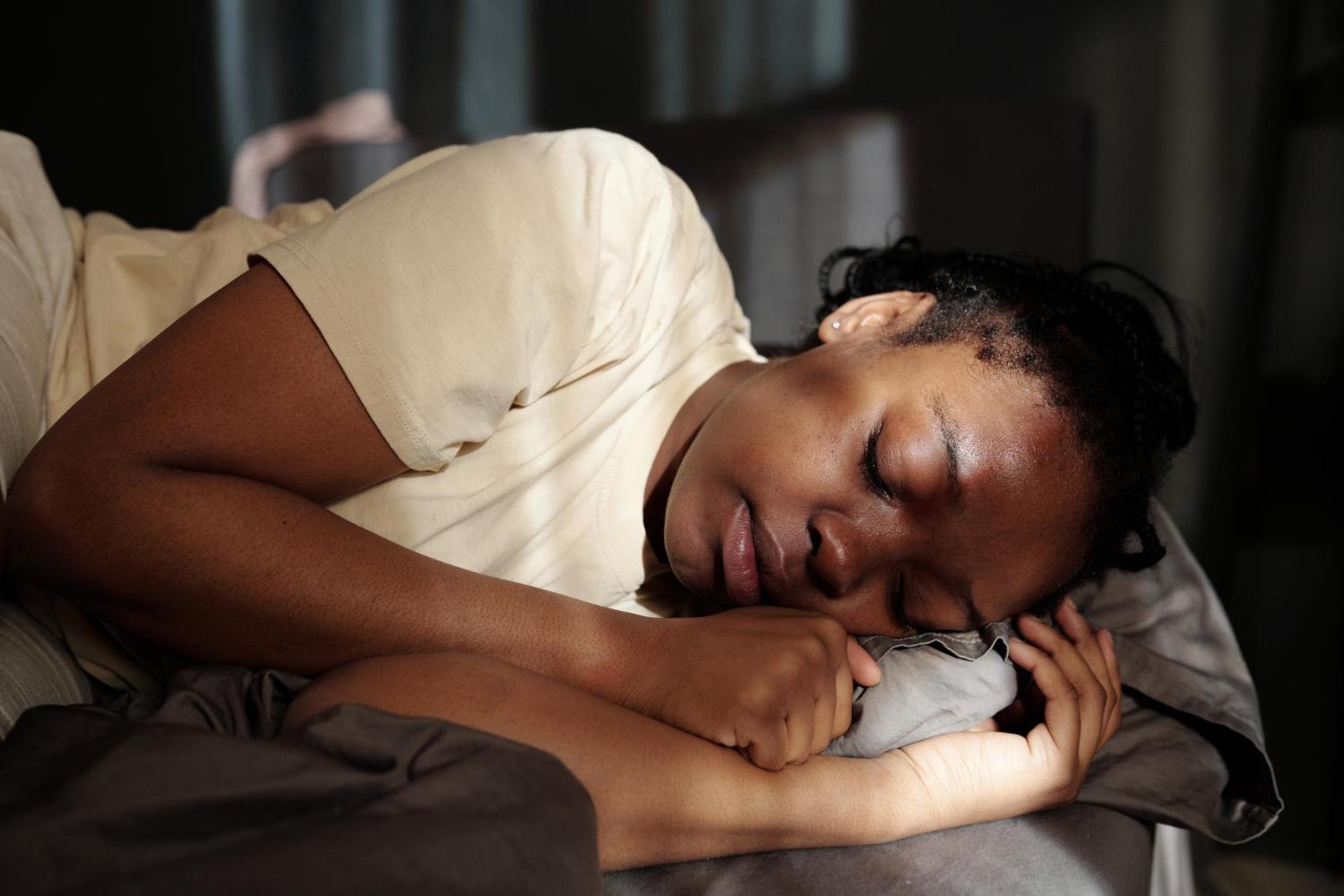
I was eleven when my mother died. That morning, I remember standing by the window, watching the women from our street fill our compound, tying their wrappers tight around their waists as they fetched water and boiled rice for the mourners. Someone had told me, “Be strong,” and I tried. I didn’t cry until they carried her body away, and my father turned his face from me, as if he couldn’t bear to look.
FOLLOW US ON WHATSAPP CHANNEL TO RECEIVE ALL STORIES IN YOUR INBOX
After the funeral, I went to live with my aunt, who stayed just two streets away. My father said it was better that way. He visited almost every day. Sometimes he came in the evenings to help me with my homework. He would bring biscuits and Fanta, tell me stories about his work, and press small notes into my palm when he was leaving. “For school,” he’d say. He didn’t live with us, but he made me feel loved.
Whenever I visited him at his house, he would give me money, hold me close, and tell me he loved me. I believed him. I still want to believe him.
But somewhere between those visits and my fifteenth birthday, something shifted. It started with a conversation, one that has replayed in my head for fifteen years. My dad took me inside and told me, “Do you know I love you so much? Because I love you this much there’s something I’m the only one who should do it. Even your mom’s ghost is angry that I haven’t done it. If I do it and you tell anyone, your mom’s ghost will kill you.”
Those words sealed my silence. He asked me to take off my cloth and I obediently did. He forced his way through me. I didn’t know what fear could do to a child until then. Fear is not just trembling or hiding. Fear is when your body remembers something your mouth cannot say.
It happened three times. Each time, I died a little. And then I stopped going to his house. My father must have sensed my distance because he stopped visiting as often. A year later, he travelled out of town, got married again, and started a new family. I was relieved, but the relief didn’t last long.
I grew up with a wound that no one could see. Now, I am thirty, a mother of two, living in Lagos with my husband. I run a small business, attend church every Sunday, laugh when I have to, and play the role of a “happy woman.” But inside, I’m still that frightened girl. The one who couldn’t tell anyone what her father did.
And now my father is old and blind and can no longer speak. I see him sometimes when we visit the village. He sits quietly on the verandah, his eyes open but lost, his lips trembling like they are still searching for words. And every time I see him, something twists inside me. Anger, pity, guilt. I don’t even know which one is stronger.
People say I’m lucky that I have a good husband, healthy children, and a decent life. But what they don’t know is that I haven’t truly slept in years. My nights are long and heavy. I wake up at 2 a.m. drenched in sweat, hearing my father’s voice in my dreams. “You know I love you.” Those words still sting like hot oil.
I have tried to forgive my father, but forgiveness is not a door you open once. It’s a door you keep knocking on, even when no one answers. There are days I want to confront him. I want to tell him that I remember everything. That his silence doesn’t erase what he did. That I have carried his sin like a heavy stone on my back for fifteen years. But then I see his frail body, his blind eyes, the saliva at the edge of his mouth, and I stop. I tell myself, “He has suffered enough.”
But has he? Or is it me who is still suffering?
Sometimes I think of going to the church to confess. To tell the Rev. Father everything. But what would I say? “My father broke me”? “My father touched me in ways he shouldn’t have”? Those words burn my tongue before they even leave my mouth. These are not things daughters say in our culture. These are things you bury under religion, under respect, under silence.
Still, silence is a prison.
My husband doesn’t know. I’ve tried to tell him twice. The first time, I started crying halfway through and he held me, asking what was wrong. I told him it was nothing. The second time, I wrote it down in a letter and burned it before he came home.
How do you tell a man that you are married but broken in ways he cannot fix? That sometimes, when he touches you, your body freezes not because you don’t love him but because your body has learned that love can hurt?
I live with that conflict every day. Recently, my father’s wife called. She said his condition was getting worse and that the family should come together before it’s too late. I hung up and sat on the edge of my bed for a long time. The thought came to me; maybe I should talk to him before he dies. Maybe I should tell him I forgive him, even if I don’t mean it. Maybe it will set me free.
But another part of me, the child still trapped in that old house says no. That some ghosts should remain buried. That digging them up only gives them breath again.
Last week, I went to church and sat at the back pew. Rev Father was preaching about mercy. He said, “Sometimes, the people who hurt us are already paying for it in ways we cannot see.” I looked up at the cross and wondered if blindness was my father’s punishment. If God had already judged him. But then, what about me? What is my punishment for staying silent?
I’m writing this now because I don’t know what to do. I don’t know if I should speak or stay quiet. If I should let him die without ever knowing how deeply he hurt me.
All I know is that I am tired of carrying this alone. When I close my eyes, I see my mother, her tired fingers, her quiet smile. Sometimes I imagine telling her everything, and in my dream, she pulls me into her arms and says, “You are free, my child.” I wake up crying, my pillow wet, my chest aching.
Does Marriage Benefit Men More Than Women?
Maybe that’s what I need —freedom. Not revenge. Not even forgiveness. Just peace.
I don’t know if I’ll ever get it.
But tonight, before I sleep, I will write a letter to my father. I will tell him everything I couldn’t say. And even if he can’t read it, even if his blind eyes will never see the words, I’ll burn the letter and let the smoke rise. Maybe the wind will carry it to whatever spirit is still watching over me.
Maybe then, I will finally rest.
#MyChildhoodTrauma
—Alika
This story you just read was sent to us by someone just like you. We know you have a story too. Email it to us at [email protected]. You can also drop your number and we will call you so you tell us your story.
******



Speak to him and let him. Forgive him and yourself and let him forgive himself as well. He should say the salvation prayer and that’s it. That alone could take the sickness away.
This was difficult to read. I am so sorry you had to experience that, Alika. I can only imagine how your father’s abominable acts have scarred your life. Please do not feel guilty in anyway because you did nothing wrong and that was all on him.
My humble suggestion is that you try therapy if you are yet to. I learned from experience that therapy can help give you some clarity and helps provide direction on the way forward. Sending prayers and God’s love your way.
Best wishes!
If he is still alive please go and face him i couldnt go when my father was alive because my mom had separated with him i had so much to say on the things he did but till now it haunts me everyday nomatter how much i try to just think about something else…..the feeling of rejection and loneliness haunts.
Its better to set youself free while he is still alive go there and face him.
If he is still alive please go and face him i couldnt go when my father was alive because my mom had separated with him i had so much to say on the things he did but till now it haunts me everyday nomatter how much i try to just think about something else…..the feeling of rejection and loneliness haunts.
Its better to set youself free while he is still alive go there and face him. Sometimes bottling up things makes the situation worse while the other party runs scott free. Imagine the things you are going through affecting your family in a way do t just stand up for yourself but also for your family so that they can enjoy you and your company.
Let him hear you say it let hime hear you utter every word through those ears of his and maybe if he confesses to everyone or apologises God will set him free to rest finally.
Alika dear, for the sake of every beautiful thing in your life, go face that man. It’s the next best thing you’ll do for yourself in this life. If you may not have words to say, please carry that letter you’ve written to him. And read it to him. Let him know how he broke you. He needs to know. Let it out of your system, and let him deal with it. Kudos for holding yourself together all those years, I know it’s been very very hard. I applaud you for choosing to live and be strong everyday despite the nasty wound you’re nursing. Now it’s time for that wound to be exposed so that you heal the proper way. Don’t hold back – let him know exactly how he hurt you.
I’m rooting for you dear, and cheering for you every step of the way. Victory awaits you at the end, and as always, I’ll be clapping for you. Give yourself this gift.
With love and light, 💕
Your healing will only come when you confront him. Don’t waste any extra time. Do that before he departs this earth. Hearing an apology from him will heal you.
Supporting you from afar. All the best.
You have an inexpensive option staring you in the face. Go for confession and say it all. Once you share the burden, its weight will be lifted from your shoulders. It’s anonymous and nonjudgmental. God is with you.